Posts

Showing posts with the label Iraq

Kurdish Official Lists ISIS and Climate Change as Top Threats

More than five years since the Iraqi government declared victory over ISIS, a senior Kurdish official says the terrorist group is among the top threats facing the region. Alongside ISIS, Rebar Ahmed, minister of interior in the Kurdistan Regional Government (KRG), listed climate change and the resource scarcities and migration it would trigger as a critical challenge.

Fighting Corruption Harder than Fighting ISIS, Says Iraq’s Deputy Prime Minister

Iraqi Deputy Prime Minister Fuad Hussein on February 10 laid out the new Iraqi government’s priorities, outlined areas of common interest with the United States and defended his country’s relations with Iran, Russia and China — countries that are all at odds with the United States.

Unemployment Replaces ISIS as Top Security Concern for Minorities in Iraq

 In the summer of 2014, the Islamic State group (ISIS) seized control of much of Iraq’s Nineveh province, including the provincial capital of Mosul. The militant group committed genocide against ethnic and religious minorities. Today, more than three years since the military defeat of ISIS in Iraq, ethnic and religious minority residents of three key districts of Nineveh say rampant unemployment, not ISIS, is their top security concern, according to data gathered by the United States Institute of Peace.

ISIS Determined to Make a Comeback—How Can it Be Stopped?

 The Islamic State (ISIS), which was driven from its strongholds in Syria and Iraq over a year ago, is determined to regain territory in the region. It will take a combination of military and financial pressure, attention to public grievances, and the repatriation and rehabilitation of people who lived or fought with ISIS—as well as those who were subjugated by them—to foil the militant group’s ambitions, according to senior U.S. officials. This already tall ask has been made even more challenging by the outbreak of the COVID-19 pandemic.

Can Muqtada Al-Sadr And The United States Be Friends?

Amid the uncertainty that has followed the Iraqi parliamentary elections on May 12 one thing is clear: formerly anti-US Shia cleric Muqtada al-Sadr’s list is the top vote-getter. Sadr is trailed by Iran-backed Shia militia leader Hadi al-Amiri in second place and current Iraqi Prime Minister Haider al-Abadi in third according to the unofficial results that are subject to change in the upcoming days.
Iraq Votes: Expect Uncertainty  Iraqis will vote on May 12 in their first election since the defeat of the Islamic State of Iraq and al-Sham (ISIS). With nearly 7,000 candidates vying for 329 seats in parliament, no single political alliance is expected to emerge with an outright majority. As a consequence, the days after the vote will be marked by desperate attempts to cobble together a ruling coalition.  

Iraqi Operation Will Deepen Rift Among Kurds

Iraqi government forces on October 16 seized vital oil fields and the city of Kirkuk from Kurdish forces. The military action, which pits two US allies against each other, followed a September 25 referendum in which the Kurds voted for an independent state. The Iraqi government had declared the vote unconstitutional. Kirkuk, which is not part of Iraqi Kurdistan but was under Kurdish control at the time, took part in the referendum. (Kurdish forces had controlled Kirkuk since 2014 when Iraqi forces fled as Islamic State of Iraq and al-Sham (ISIS) militants advanced on the city.)
Governance Battle Crucial in Iraq, says Retired Gen. David H. Petraeus This is Part 2 of a two-part interview. Retired Army Gen. David H. Petraeus believes that the war against the Islamic State of Iraq and al-Sham, while a “generational” one, will eventually be won. The more consequential battle, he contends, is the war that will follow: for governance. 
Image
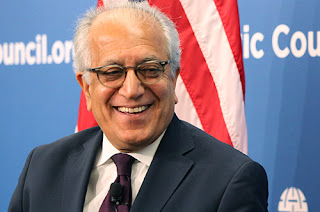
US Foreign Policy Needs to be ‘Balanced’ Between ‘Great Exertions’ and ‘Retreat’   Zalmay Khalilzad served as the US Ambassador to Iraq, Afghanistan, and the United Nations in the George W. Bush administration. A member of the Atlantic Council’s Board of Directors, Khalilzad has recently authored an insightful and widely praised memoir— The Envoy . In a wide-ranging interview with the New Atlanticist’s Ashish Kumar Sen, he discussed the lessons learned from the US experiences in Afghanistan and Iraq, prospects for peace with the Taliban, and US diplomacy in a post-Iran nuclear deal Middle East, among other issues.  "The right lesson to learn from Iraq and Afghanistan is that big projects such as these two need to be done very selectively and rarely, we also need to recognize that we might have to do them again,” said Zalmay Khalilzad, a former US Ambassador to Afghanistan and Iraq. Khalilzad is a member of the Atlantic Council’s Board of Directors. (Atla...
Is Dissent Brewing in ISIS’ Ranks Over Plans to Strike the United States, Europe?  A shift from the Islamic State of Iraq and al-Sham’s goals of building a caliphate to attacking Europe and the United States is reportedly causing a rift in the terrorist group’s upper echelons. A lieutenant to ISIS’ self-proclaimed caliph, Abu Bakr al-Baghdadi, told Martin Chulov, a reporter with the Guardian , that he and at least half a dozen others in the group’s military leadership council don’t believe ISIS can benefit from this shift in strategy.
Iran, Syria, Russia Seen as Top Challenges in the Middle East   Iran, Syria, and Russia together pose the biggest challenge in the Middle East today, and any notion that there can be an alignment of the interests of Tehran and Washington is unrealistic, three former US officials said at the Atlantic Council on February 16.
How Do You Disrupt ISIS’ Social Media Strategy and Safeguard Freedoms?   The Obama administration is “trying to come to grips with” how to prevent terrorists from using technology as a recruiting tool, while at the same time safeguarding individual freedoms, Adm. Michael S. Rogers, the Commander of US Cyber Command and Director of the National Security Agency, said at the Atlantic Council on January 21.
US' Syria Policy 'Paralyzed' by Rhetoric that Assad Must Go, Says Hagel  Former Secretary of Defense, Chuck Hagel, thinks that the Obama administration has become “paralyzed” by its rhetoric that Syrian President Bashar al-Assad must step down, said budget cuts have pushed the United States “perilously close” to being unable to maintain its military dominance, equated the Republican presidential campaigns to an amateur talent contest, and had some advice for Donald Trump: “focus on uniting this country, not dividing it.”
Has Turkey Become a Distraction in the War on ISIS?  Turkey’s entry into the US-led coalition against the Islamic State of Iraq and al-Sham (ISIS) last summer was marked by Turkish airstrikes on Kurdish militias—a departure from the coalition’s mission. In November, Turkey shot down a Russian jet that it said had violated its airspace. Turkey is now involved in a dispute with Iraqi Prime Minister Haider al-Abadi over the presence of Turkish troops at a base in northern Iraq.  Has Turkey become a distraction in the war on ISIS?
Saudi Arabia Must Find Cure for ‘Wahhabi Virus,’ Says Iraqi Lawmaker  Mowaffak al Rubaie is a former National Security Advisor of Iraq who currently serves as a member of parliament in Baghdad. In this interview with the New Atlanticist’s Ashish Kumar Sen, Rubaie discusses the war on the Islamic State of Iraq and al-Sham (ISIS), also known as ISIL and Daesh; the danger posed by Wahhabism; the implications for Iraq of the Iran nuclear deal; and much more.
Ending Syria’s War Will Require All Hands on Deck  Nabil Fahmy served as Egypt’s Foreign Minister from 2013 to 2014. In this interview with the New Atlanticist’s Ashish Kumar Sen, Fahmy makes the point that the United States, Russia, the Arab states, Iran and Turkey will all need to work together to end the conflict in Syria. Here are excerpts from our interview.
British Defense Secretary Calls for Tightening Noose Around ISIS  The US-led coalition that is conducting airstrikes on the Islamic State in Syria should more deliberately target the terrorist group’s infrastructure and “tighten the noose” around its de facto capital Raqqa, British Defense Secretary Michael Fallon said at the Atlantic Council on Dec. 11.  
Is the United States a Less Reliable Ally?   The United States’ friends and allies in the Middle East see Washington as a less reliable partner and are “talking fairly openly about alternatives” such as Russia and China, retired Gen. James L. Jones, Jr., a former US National Security Advisor, said on Dec. 8.
Turkey's War in Syria: Of Kurds and Ways A landmark agreement between the United States and Turkey—that allows US jets to use a Turkish air base to launch strikes against Islamic State of Iraq and al-Sham (ISIS) militants and envisages the creation of a “safe zone” in war-ravaged Syria—is a step in the right direction, but also raises some important questions.
#CounteringISISpropaganda  Web-savvy extremists belonging to the Islamic State of Iraq and al-Sham (ISIS) and their online cohort of supporters dominate the conversation on Twitter leaving little hope for the success of US efforts to counter that propaganda, according to a former State Department official.